December 7, 2025
Can Physical Therapy Help You Avoid Surgery? Insights from Specialists
Many patients arrive with a mix of fear and hope, wondering if surgery is their only option or if clinical rehabilitation can still change the course of their condition. Prestige Medical & Physical Therapy welcomes individuals who have carried discomfort for months, along with the concern that their bodies may never regain steady function.
Our clinicians follow evidence-based evaluation standards, applying biomechanical analysis, targeted manual therapy, and progressive loading strategies to guide healing. Florida patients often want clear answers about whether physical therapy can help them avoid surgery, and for many, the outlook becomes hopeful once a tailored plan begins to take effect.
1) Why Non-Surgical Treatment Commonly Stands as the Clinically Preferred First Phase of Care
When evaluating a patient, the first question is whether function can be restored through less invasive measures. Skilled physical therapists focus on movement restoration, strengthening, and correcting patterns that drive pain. These strategies often lead to fewer complications, shorter recovery, and a quicker return to daily life.
Surgery remains essential for severe structural damage or neurological risk. For many degenerative and overuse conditions, structured rehabilitation improves joint mechanics, reduces pain sensitization, and rebuilds activity tolerance. Evidence-guided protocols with careful monitoring ensure decisions are data-driven and safe, preserving options while helping patients regain confidence in movement.
2) How Physical Therapy Guides a Safe and Effective Recovery Plan

Physical therapy reorients recovery from passive hope to active progress by giving patients specific tools that change how their bodies tolerate movement and load. At its heart, therapy is a staged process that restores capacity in a measurable way and helps people regain confidence in everyday tasks, from walking on sandy paths to lifting a grocery bag.
Core components and what they accomplish:
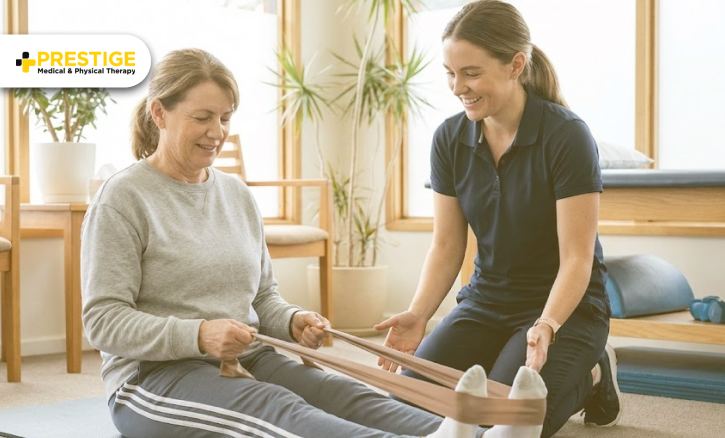
Progressive loading, where strength and endurance demands increase in planned steps, builds tissue tolerance and reduces flare-ups.
Movement retraining, which corrects faulty patterns that concentrate stress in one joint or tendon, spreads the load across healthier structures.
Neuromuscular control exercises that improve timing and coordination, lowering the risk of recurrent injury.
Graded exposure to feared activities, paired with pain education, which reduces sensitivity and restores normal activity without excessive guarding.
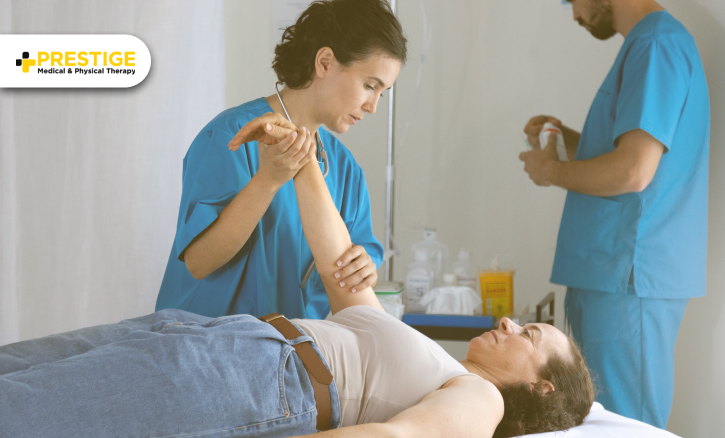
Manual techniques and hands on strategies that improve mobility and relieve painful stiffness when used selectively.
Functional integration, where gains in the clinic transfer to meaningful tasks and routines at home and work.
We also monitor progress with simple measures, for example, walking distance, sleep quality, and task-specific strength, so changes are visible and decisions are data-informed.
3) Conditions Where Rehabilitation Programs Can Help Avoid Surgery
In everyday practice we see patterns that matter clinically and practically, especially for people who prefer to avoid surgery if safe choices exist. American Academy of Orthopaedic Surgeons (AAOS) strongly recommends supervised exercise, land-based or aquatic, neuromuscular training, self-management programs, and patient education.
Basic conditions where therapy is frequently equal to surgery, with what the evidence says:
Degenerative meniscal tears, where randomized trials found exercise-based physical therapy noninferior to arthroscopic partial meniscectomy at five years, with many patients avoiding an operation when given a careful trial of rehabilitation.
Knee osteoarthritis, where systematic reviews consistently report that structured exercise programs reduce pain and improve function, and guidelines recommend exercise and education as foundational first-line care.
Rotator cuff tendinopathy and small to moderate tears, where several trials show meaningful improvements with supervised rehabilitation, and outcomes for pain and activity may be similar to surgery for selected patients at medium-term follow-up. Patient age, tear size, and activity goals shape the recommendation.
Many presentations of non specific low back pain, where conservative strategies led by therapists are the standard early approach; however, clinicians remain vigilant for red flags that change the pathway to urgent surgery. Guidelines emphasize measured, evidence-informed conservative care before operative options for most cases.
We translate this evidence into a clear trial of targeted rehabilitation, monitor objective progress, and keep surgical consultation available when recovery stalls or anatomic urgency appears, so patients in Florida can choose a path that protects function and aligns with their life.
4) When Surgery Remains an Important Option

Some paths to recovery begin with therapy and stay there; however, surgery remains the right choice for certain problems. We recommend operative care when structural damage is severe, when neurological signs progress, or when conservative measures have been given a fair, well-documented trial and function remains unacceptable. Examples include displaced fractures, large tendon ruptures in high-demand patients, and emergent spinal compression with evolving weakness.
We explain these realities with care so people in Florida understand the trade-offs, the urgency when it exists, and the ways surgery can restore anatomy that therapy cannot. Choosing an operation is rarely a failure; it is a reasoned step when anatomy, safety, and patient goals align.
5) What a Structured PT Program Looks Like for Patients Hoping to Avoid Surgery
A good program is more than sessions on a schedule; it is a coherent plan that progresses with measurable checkpoints. Below are the important ingredients we use and why each matters.
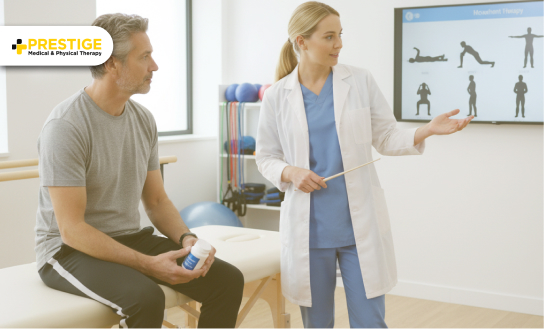
Initial assessment, including functional tests and clear patient goals, to create a baseline and identify red flags.
Individualized exercise prescription, with staged increases in load and complexity to rebuild strength safely.
Movement retraining sessions that address biomechanics relevant to the patient’s daily life, for example, gait on uneven sand or lifting grocery bags.
When stiffness prevents progress, manual therapy and targeted mobility techniques are used as an adjunct rather than a crutch.
Pain education and pacing strategies that reduce fear-driven guarding and increase activity tolerance.
Home program with practical instructions and simple progress markers, so gains translate into daily function.
Regular outcome reviews at planned intervals, using objective measures to inform adjustments to the plan.
This framework keeps care proactive and accountable, and it helps people see progress in ways that matter to their lives.
6) Signs Your Nonsurgical Treatment Plan Is Working

Progress is rarely dramatic overnight; however, there are clear, existent world signs that therapy is moving you toward recovery. We encourage patients to track simple markers that reflect both function and quality of life.
Look for improvements such as:
Increased ability to perform a previously limited task, for example, climbing stairs, gardening, or walking the block.
Reduced need for pain medication or fewer pain spikes with normal activities.
Better sleep quality because pain is less intrusive at night.
Greater confidence when returning to familiar activities, with fewer protective movement patterns.
Objective gains on strength or mobility tests recorded by your therapist.
When these markers shift, clinicians and patients can celebrate small wins while sustaining momentum toward larger goals.
7) When to Reevaluate Your Recovery Plan With Specialists
If measurable progress stalls despite adherence to a thoughtfully delivered program, it is time to reassess. We recommend a structured reevaluation after an adequate therapeutic trial, typically around 6 to 12 weeks depending on the condition; however, timing is individualized.
Reevaluation may include:
Repeating functional measures and comparing them to the baseline.
Discussing adherence, barriers, and realistic goal alignment.
Updating imaging or arranging a specialist consultation if anatomy or neurological status is in question.
Consider prehab, where therapy continues to optimize strength and mobility prior to a planned operation, improving surgical outcomes and recovery speed.
Framing reassessment as a collaborative checkpoint removes pressure, and it keeps the patient’s safety and preferences front and center.
Frequently Asked Questions
Q: Can physical therapy truly replace surgery for my condition?
A: For many degenerative and overuse problems, high-quality therapy can deliver outcomes similar to early surgery; however, the answer depends on the specific diagnosis, imaging, and personal goals.
Q: How long should I try PT before reconsidering options?
A: A practical benchmark is six to twelve weeks for most nonurgent conditions, though some problems require shorter or longer trials based on symptom severity and progress.
Q: What if therapy initially increases my pain?
A: Temporary increases can occur when tissues are challenged; however, therapists use graded exposure and close monitoring to distinguish helpful adaptation from harmful overload.
Q: Do I need imaging before starting therapy?
A: Not always. Many patients begin safe, progressive rehabilitation without advanced imaging, unless red flags or specific clinical concerns suggest it is necessary.
Q: How do I know I am safe to delay surgery?
A: Safety is determined by objective progress, absence of neurological deterioration, and shared decision-making with your care team. Preservation of function and absence of urgent signs usually make a therapy-first approach reasonable.
Q: Can PT help me if I ultimately choose surgery?
A: Yes, preoperative therapy strengthens tissues and improves mobility, which often leads to smoother recoveries and better outcomes after surgery.
Avoid Surgery and Recover Safely With Prestige Medical & Physical Therapy
We coordinate care across clinicians, communicate clearly about risks and expected timelines, and document progress so decisions rest on data, not anxiety.
Whether a patient remains on a nonsurgical path or moves toward an operation, our aim is to preserve dignity, maximize function, and reduce uncertainty. If you would like to talk through options or schedule an evaluation, contact Prestige Medical & Physical Therapy to arrange a consultation with one of our clinicians.
Recent Blogs